
Beginner gear guide
Page Library
Beginner gear guide
A beginner gear guide for music teachers and lesson sites to publish on their public blog, where it answers the question every new student asks first. It helps adults choose between acoustic and electric, sets realistic budgets, compares sample starter guitars in a table, lists the handful of accessories worth buying and warns against the expensive mistakes. The products here are invented examples. Replace them with the instruments and shops you recommend, update prices each year and keep the honest, no-pressure advice.
The beginner's guitar gear guide
You don't need much to start playing guitar, and you definitely don't need to spend a fortune. Here's what actually matters when you buy your first instrument, from someone who has watched thousands of adults start out.
Buy a guitar you like the look of, between $200 and $400, that's been set up properly so it's easy to play. Add a tuner, a few picks and a strap. That's it. Everything else can wait.
Acoustic or electric?
Both are fine, and the lessons work on either. The best choice is the one that matches the music you want to play, because that's what keeps you picking it up.
Acoustic
- Pick it up and play, nothing to plug in
- Great for folk, country, pop and singing along
- Builds finger strength quickly
- Heavier strings, so sore fingertips last a little longer
Electric
- Lighter strings and a thinner neck, easier on beginners' hands
- Best for rock, blues and funk
- Quiet practice with headphones
- Needs an amp, which adds to the cost
Avoid classical (nylon-string) guitars unless you want to play classical or flamenco music. Their wide necks make chords harder for most adults.
How much to spend
Very cheap guitars are where most beginner frustration comes from. High strings, tuning pegs that slip and frets with sharp edges make everything harder than it should be, and most people blame themselves rather than the instrument.
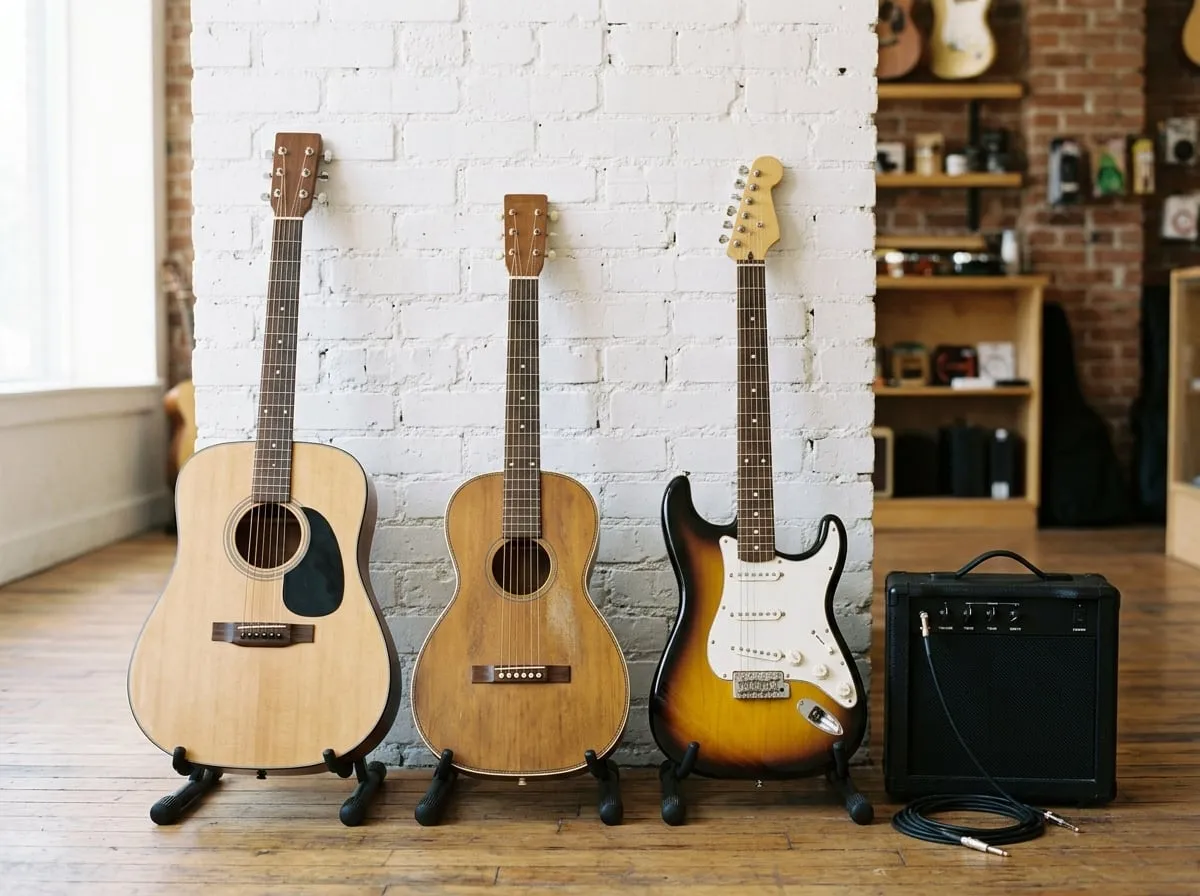
Five sample starter guitars
These are examples of the kinds of guitars we'd recommend, to show what to look for at each price. Try any guitar in person if you can.
| Guitar | Type | Price | Good for |
|---|---|---|---|
| Harlow D-20 | Full-size acoustic | $249 | The all-rounder. Big, warm sound for strumming and singing. |
| Harlow P-12 Parlor | Small-body acoustic | $279 | Smaller players and couch practice. Comfortable and light. |
| Ridgeway Travel | 3/4-size acoustic | $189 | A second guitar for trips. Fine to learn on if you're under 5'4". |
| Voltline S-1 Starter Pack | Electric + 15-watt amp | $329 | Rock and blues on a budget, with a headphone jack for quiet practice. |
| Voltline T-Classic | Electric | $399 | Country and blues twang. Built to last well beyond the beginner years. |
Why a setup matters more than the brand
A setup is a 30 to 60 minute adjustment by a guitar technician: lowering the strings, smoothing the frets and making sure it stays in tune. It typically costs $50 to $80, and it can make a $250 guitar play like one costing twice as much.
- Ask the shop whether the guitar has been set up before it leaves. Good local shops often include it for free.
- Buying online? Budget for a setup at a local shop within the first week.
- Check the action. Press a string at the 12th fret. If it takes real effort, the strings are probably too high.
Accessories worth buying
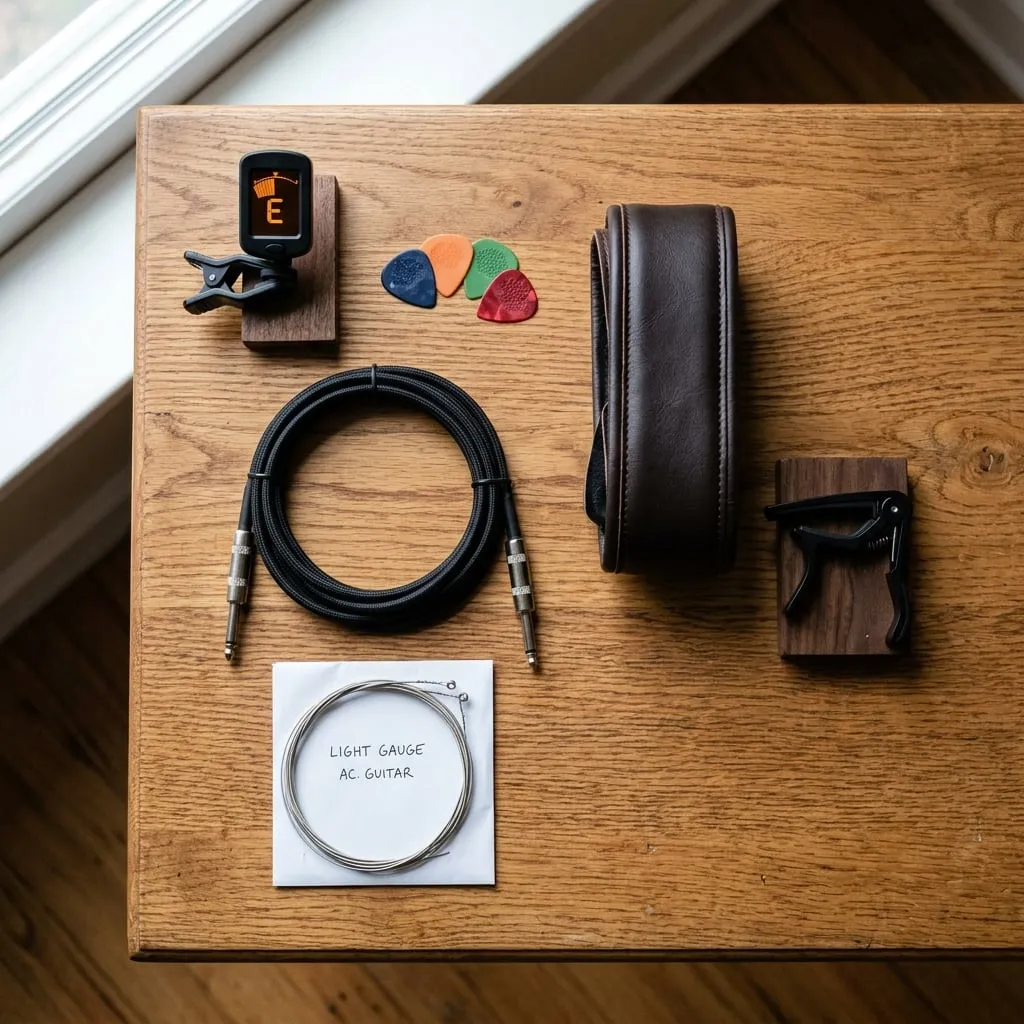
- Clip-on tuner ($15). An out-of-tune guitar sounds wrong even when you play it right.
- Picks ($5). Get a variety pack and start with thin or medium.
- A strap ($15). Even if you sit, it helps hold the guitar steady.
- A spare set of strings ($10). Change them every three months or so.
- A capo ($15). Not urgent, but by Level 2 you'll use it all the time.
- A stand ($20). A guitar on a stand gets played. A guitar in a case gets forgotten.
What to skip for now
- Effects pedals. Fun later, but they hide what your hands are doing.
- Big amps. A 10 to 20 watt practice amp is plenty for home.
- Expensive cables, strings or picks promising a better tone.
- A second guitar, until you've played the first one for at least six months.
The best guitar for a beginner is the one that's easy to play and that you can't wait to pick up.
Members of Fretwork Guitar Academy start with a lesson on tuning, holding the guitar and checking whether it needs a setup, then go straight on to their first chords. Try it free for 7 days.
Use this page
Make it yours in a few minutes
- Find it in your Control Panel. Go to Content > Page Library and search for "Beginner gear guide".
- Add it to your site. Choose a title and a department. The page arrives as a draft, with its pictures copied to your site and your site's name already in place.
- Change the words and pictures. Open it in the Membergate editor, replace the sample text and images with your own, and make it live when you are ready.