
Volunteer handbook
Page Library
Volunteer handbook
A volunteer handbook for a nonprofit to keep in its members area, so every volunteer has the same clear guidance. It welcomes new volunteers, explains how to sign up for and cancel shifts, covers safety, heat and tool use, sets out food-handling steps for donated produce, lists the rules for working with young people and ends with key contacts and a sign-off checklist. Rewrite the procedures to match your own policies, update names and phone numbers, and have your insurer or adviser review the safety sections.
Volunteer handbook
Welcome to the Riverbend Community Gardens volunteer team. This handbook covers everything you need to know to have a safe, useful and enjoyable time in the gardens. Please read it before your second shift.
1. Signing up for shifts
All shifts are listed in the members area under Volunteer shifts. Each shows the garden, the job and how many places are left.
- Choose a shift. Most shifts are 2 to 3 hours. Harvest share runs need a car and a license on file.
- Confirm it. You will get an email confirmation and a text reminder the evening before.
- Cancel if plans change. Please cancel at least 24 hours ahead from the same page, so we can offer your place to someone else.
- Log your hours. Your garden lead records your hours at the end of each shift. Check them any time on your account page.
If a shift is canceled for storms or extreme heat, we text everyone by 7am for morning shifts and by noon for afternoon shifts. No text means we are on.
2. When you arrive
- Sign in on the clipboard in the tool shed, or with the QR code on the shed door.
- Find your garden lead. They wear an orange bandana and will give you the day's tasks.
- Fill a water bottle. Every garden has a drinking water tap next to the shed.
- Note where the first aid kit, the fire extinguisher and the nearest restroom are.
3. Safety in the garden
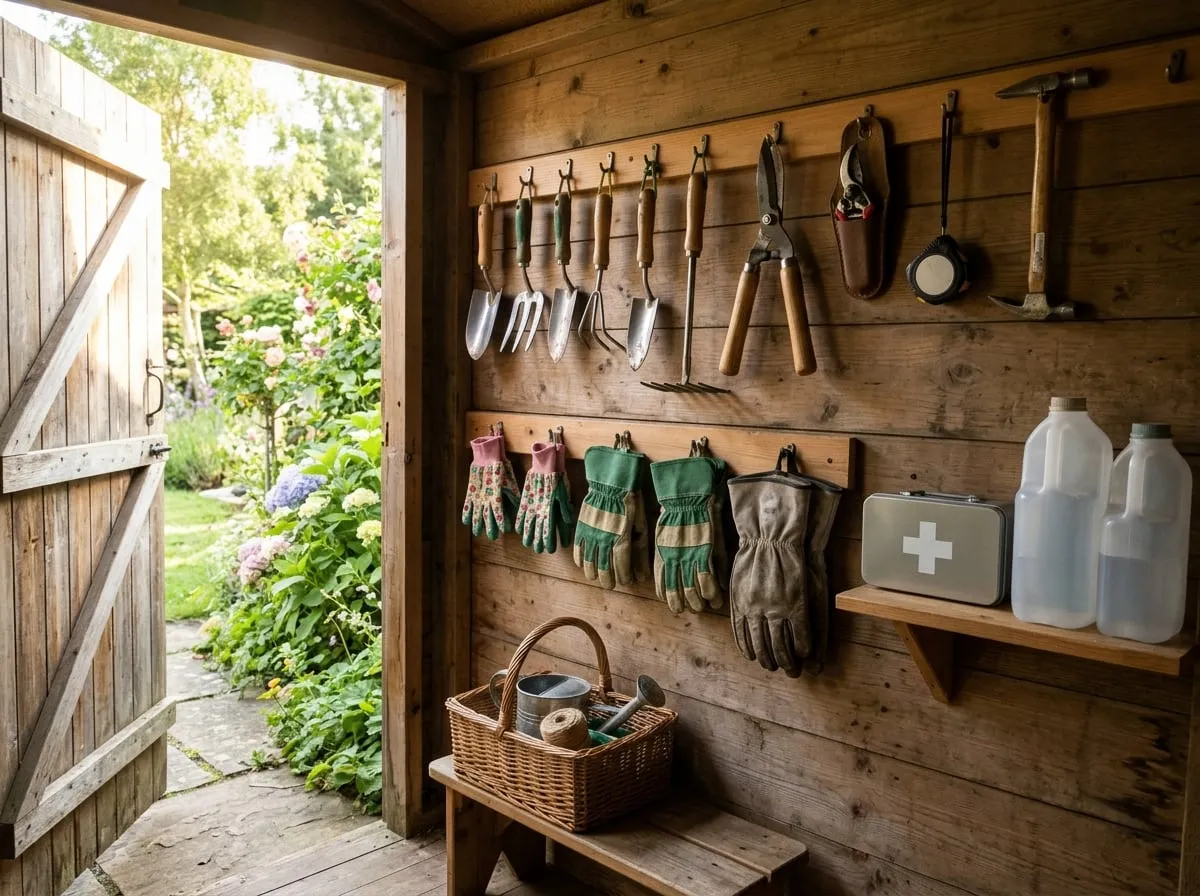
Tools
Carry long tools with the sharp end pointing down. Never leave a rake or hoe lying tines up. Return every tool to its hook and report anything broken to your lead. Power tools are used only by trained build-day leads.
Heat and sun
Columbus summers are humid. Take a water and shade break every 30 minutes on days above 85 degrees, and stop at once if you feel dizzy, sick or stop sweating. Tell your lead, and we will help you cool down.
Lifting
Bags of compost weigh up to 40 pounds. Lift with your legs, ask for help with anything awkward and use a wheelbarrow wherever you can.
Accidents
Every lead is trained in first aid. Report every injury, however small, so it can be recorded. For anything serious, call 911 first, then call the volunteer coordinator.
4. Handling harvest share produce
The vegetables we donate go straight to families' tables, so we follow the same food safety steps every time.
| Step | What to do |
|---|---|
| Before you start | Wash your hands at the handwashing station and put on clean gloves. Do not handle produce if you are unwell. |
| Harvesting | Use the blue crates only. They are kept for food and never used for weeds or compost. |
| Washing | Rinse in clean running water, never in a standing tub. Leafy greens are rinsed twice. |
| Packing | Leave out anything bruised, moldy or chewed. When in doubt, compost it. |
| Delivery | Deliver within three hours of harvest, keep crates out of direct sun and get a signature at the pantry. |
5. Working with young people
Youth Growers mentors and anyone volunteering alongside teens must have a current background check on file. In addition, everyone follows these rules:
Always
- Work in groups, in view of other adults
- Use first names and keep conversation respectful
- Report any concern to the program manager the same day
Never
- Be alone with a young person, including in a car
- Connect with participants on personal social media
- Take photos of participants on your own phone
6. How we treat each other
Our gardens bring together people of every age, background, language and ability. We expect every volunteer to be patient, kind and respectful, and to leave politics and sales pitches at the gate. Harassment or discrimination of any kind means you will be asked to leave and may not return.
Leave the garden, and the people in it, a little better than you found them.
7. Key contacts
Volunteer coordinator
Luis Ortega
(555) 014-3817
Shifts, hours and general questions
Youth program manager
Keisha Brown
(555) 014-3829
Anything involving Youth Growers
Emergencies
Call 911 first
Then the on-call lead at (555) 014-3899
Once you have read this handbook, let your garden lead know at your next shift. They will mark it on your volunteer record.
This handbook is a starting point, not legal or insurance advice. Check the safety, food-handling and youth sections against your own policies and local rules, and ask your insurer or an adviser to review them.
Use this page
Make it yours in a few minutes
- Find it in your Control Panel. Go to Content > Page Library and search for "Volunteer handbook".
- Add it to your site. Choose a title and a department. The page arrives as a draft, with its pictures copied to your site and your site's name already in place.
- Change the words and pictures. Open it in the Membergate editor, replace the sample text and images with your own, and make it live when you are ready.