
Training guide: loose-leash walking
Page Library
Training guide: loose-leash walking
A members-only training guide for dog trainers, pet coaches and owner communities, written so owners can follow it on the sidewalk. This sample teaches loose-leash walking: why dogs pull, the gear to use, five numbered steps from the living room to the street, a two-week practice plan in a table, answers to common problems and a weekly challenge for the member forum. Use it as the pattern for any behavior guide in your library. Keep the structure, change the steps and plan for your own method, and add a photo of your dogs.
Loose-leash walking, step by step
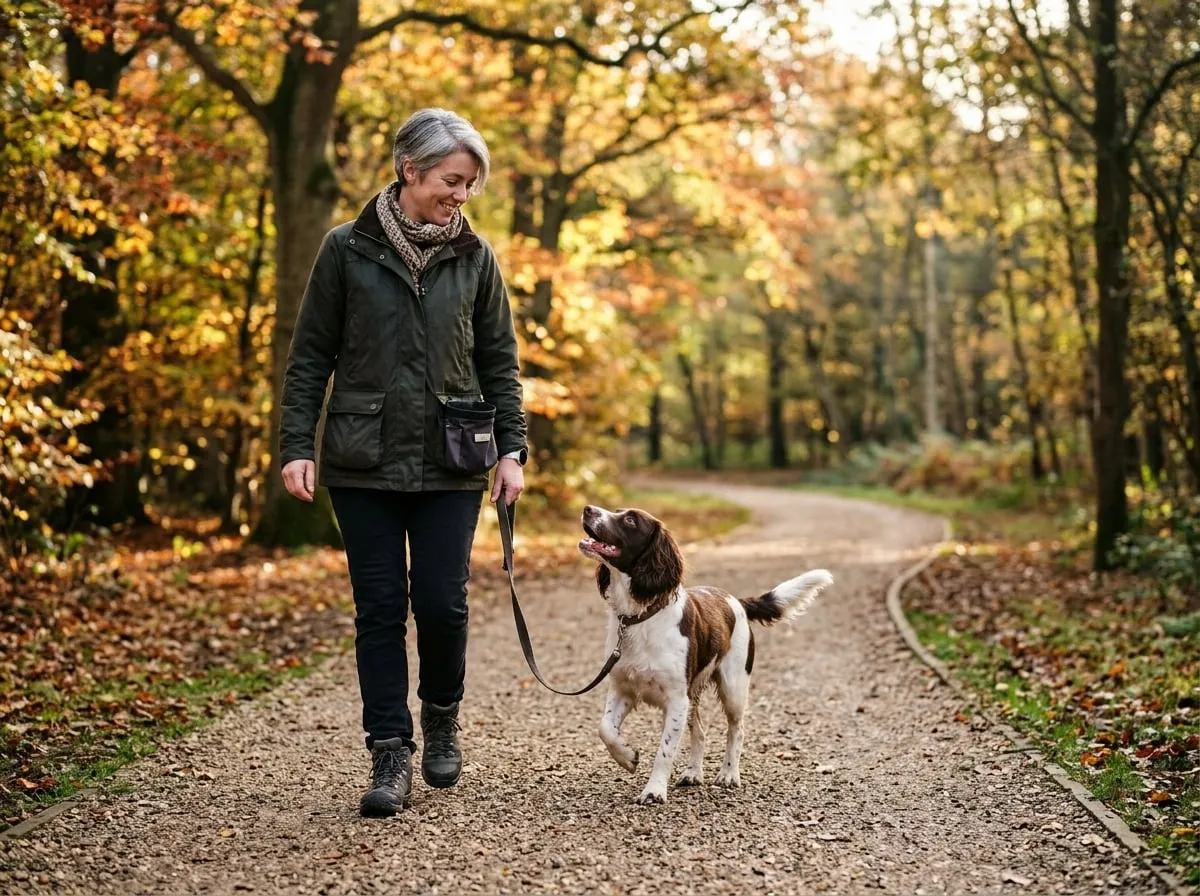
Dogs pull because pulling works: they get to the good smells faster. In this guide you will teach your dog that a loose leash is the only thing that moves you forward, and that walking near you pays better than pulling ever did.
What you need
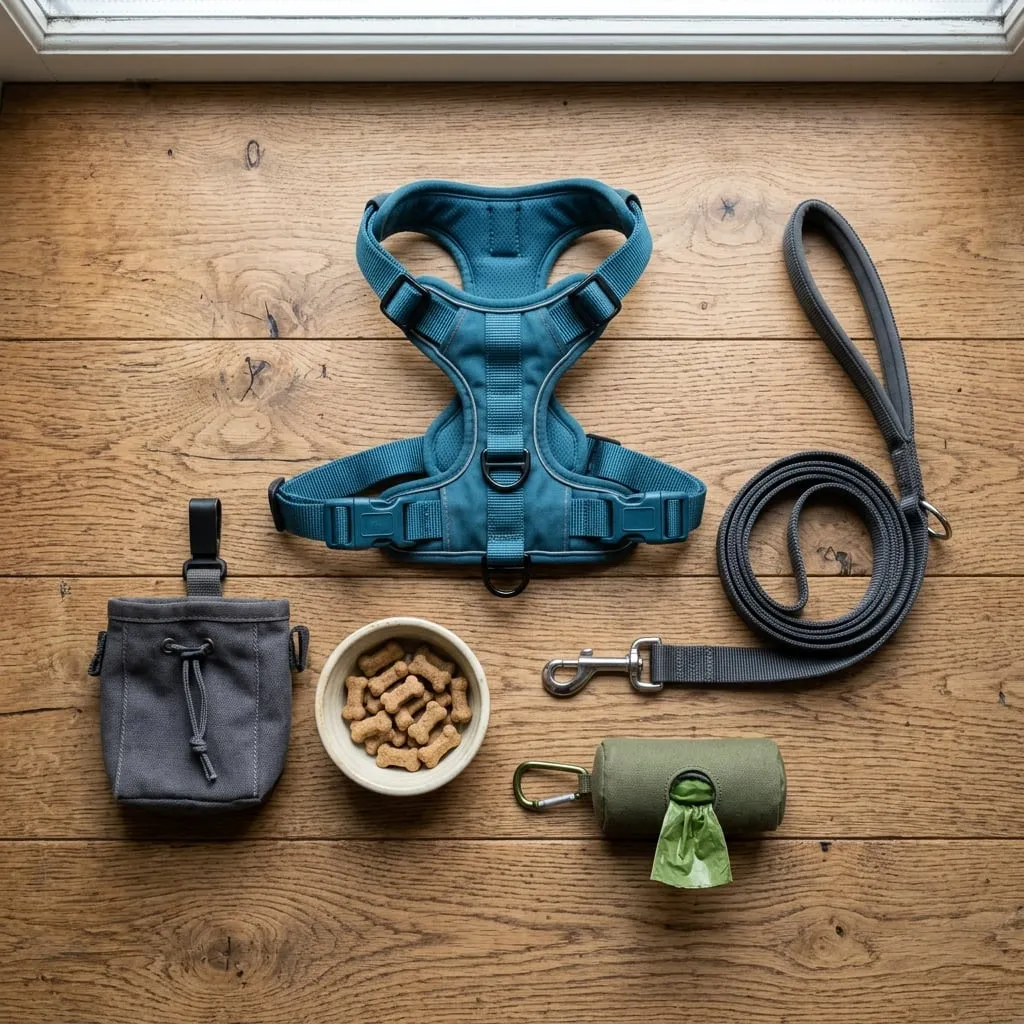
- A well-fitted front-clip harness. It turns your dog gently toward you when they pull.
- A 6-foot flat leash. Retractable leashes teach dogs that pulling earns more leash.
- A treat pouch on your hip, so rewards are fast.
- Pea-sized soft treats your dog loves: cheese, chicken or a soft training treat.
- A hungry dog. Practice before meals, not after.
The five steps
- Pick a reward spot. Choose one side for your dog, usually your left. Every treat is delivered right by your leg on that side, at your dog's nose height. Your dog quickly learns that this spot is where good things happen.
- Start indoors with no leash. Walk around your living room. Every time your dog is beside you, say "yes" and drop a treat at your leg. Do this for three minutes, twice a day, for two days.
- Add the leash and the stop. Now clip on the leash in the hallway or yard. The moment the leash goes tight, stop and stand still like a tree. Wait. When your dog turns back or the leash loosens, say "yes", treat at your leg and walk on.
- Change direction. If your dog keeps forging ahead, turn and walk the other way with a happy "this way!" Reward when they catch up to your side. Lots of turns make you more interesting than the sidewalk.
- Take it outside slowly. Start on a quiet street at a quiet time. Reward every two or three steps at first, then every five, then every ten. When you add distractions, go back to rewarding more often.
Any time your dog looks up at you on a walk without being asked, reward it. Dogs who check in often rarely hit the end of the leash.
Your two-week plan
Short sessions win. Stop while your dog is still keen.
| Days | Where | Session | Reward every | Goal |
|---|---|---|---|---|
| 1 and 2 | Living room, no leash | 2 x 3 min | Every step beside you | Dog seeks your left side |
| 3 to 5 | Hallway or yard, on leash | 2 x 5 min | 2 to 3 steps | Dog turns back when you stop |
| 6 to 8 | Quiet street, early morning | 1 x 10 min | 3 to 5 steps | Half a block with a loose leash |
| 9 to 11 | Your normal route | 1 x 15 min | 5 to 10 steps | A full block, a few stops allowed |
| 12 to 14 | A busier street or park | 1 x 15 min | Back to 2 to 3 steps near distractions | Walk past one distraction calmly |
On normal walks during these two weeks, use a different setup, such as a back-clip harness, and don't worry about pulling. That way your dog learns that the training setup always means loose-leash rules.
When it goes wrong
My dog pulls the moment we leave the house.
The front door is exciting. Practice the stop at the door itself: open it, and if your dog pulls, close it again. You only step out on a loose leash.
My dog ignores treats outside.
The street is too exciting for now. Use a better treat, practice in a quieter place, or try a few minutes of sniffing first to take the edge off.
My dog lunges at other dogs or people.
That is reactivity, not pulling, and it needs a different plan. Cross the street to give space, and book a private session or post in the Reactive Dogs forum.
We were doing well, then went backward.
Completely normal around day 7 to 10. Go back one row in the plan for two days, then move forward again.
A dog who suddenly starts pulling, stopping or refusing to walk may be uncomfortable. If anything has changed quickly, see your vet before you train.
This week's challenge
On day 8, film 30 seconds of your dog walking on the quiet street and post it in the Training Club forum. Chris and the team will reply to every video with one thing to keep and one thing to change.
Use this page
Make it yours in a few minutes
- Find it in your Control Panel. Go to Content > Page Library and search for "Training guide: loose-leash walking".
- Add it to your site. Choose a title and a department. The page arrives as a draft, with its pictures copied to your site and your site's name already in place.
- Change the words and pictures. Open it in the Membergate editor, replace the sample text and images with your own, and make it live when you are ready.